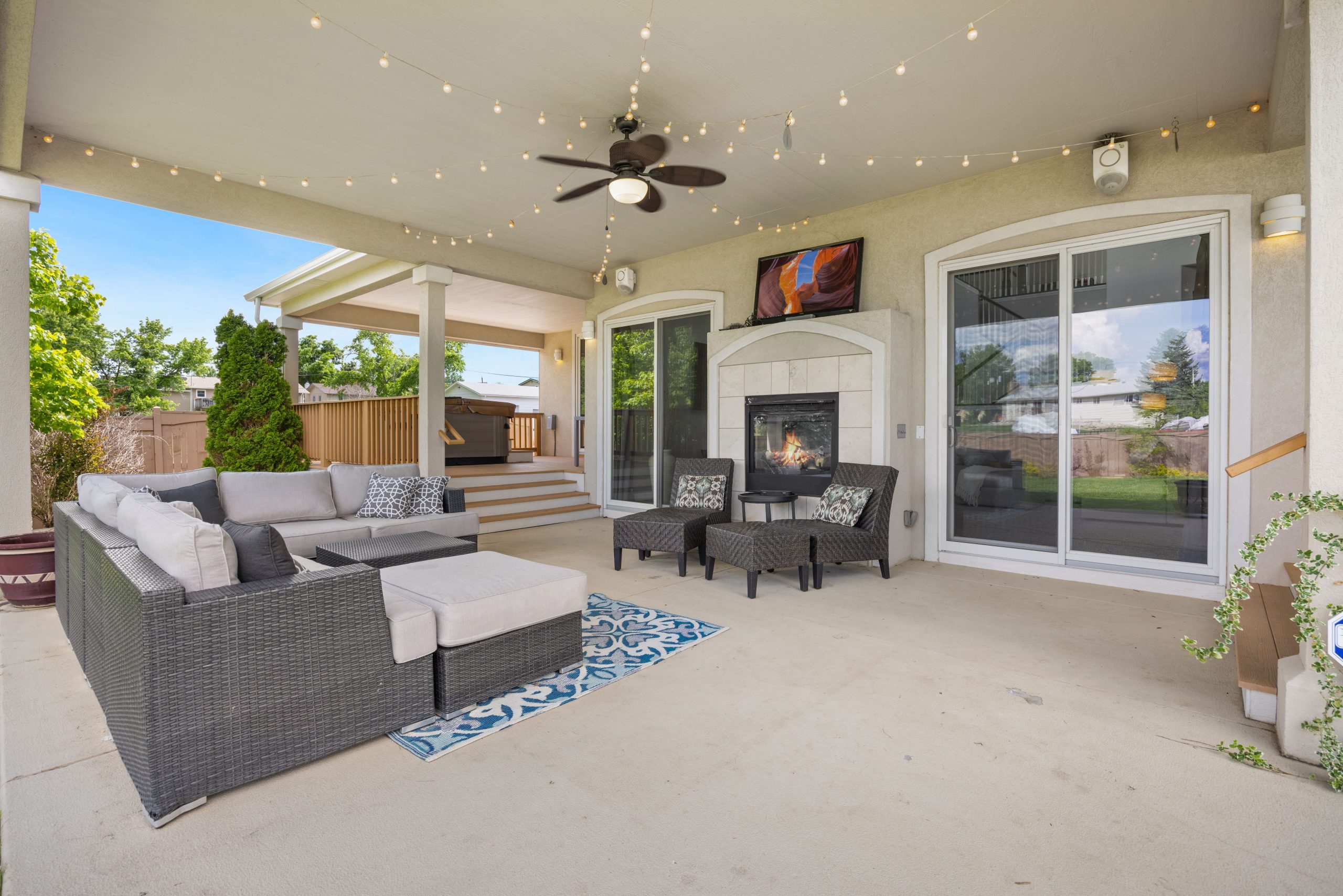
A memorable outdoor gathering rarely depends on one spectacular object. Guests remember whether they could hear one another, find a drink without interrupting a conversation, stay comfortable after sunset, and move naturally between dinner, the pool and the fire. That is why the best luxury lounges feel almost effortless: their planning is visible in the experience, not in a catalogue of expensive finishes.
Material selection still matters. Hard-wearing surfaces, comfortable upholstery and weather-resistant details determine whether a lounge remains inviting after repeated use. For homeowners comparing options, composite outdoor furniture can be one material category to investigate alongside treated timber, powder-coated metal and natural stone. The important question is not which material sounds most luxurious, but which one supports the way people will actually gather.
Design the experience before the look
Start by imagining the evening as a sequence rather than a photograph. A guest arrives, puts down a bag, accepts a drink, finds a seat, joins a conversation, eats, wanders toward the pool or fire, and eventually needs a clear route back indoors. Each transition can either feel intuitive or create small irritations that accumulate.
Before selecting furniture, write down the likely uses of the space:
- A quiet arrival point where guests can pause without blocking the entrance.
- A primary conversation setting with seating arranged toward one another, not only toward a view.
- A dining or serving area with enough clearance for people to stand behind chairs.
- A secondary destination, such as a pool edge, bar, fire pit or garden path.
- A sheltered retreat for wind, light rain or a guest who wants a quieter conversation.
This approach also exposes a common mistake: designing for the aerial view. A lounge can look beautifully symmetrical from above and still be awkward at human height. The view from a seated position, the direction of the evening breeze and the route a server takes with a hot dish matter more than perfect geometry.
Give every kind of gathering its own zone
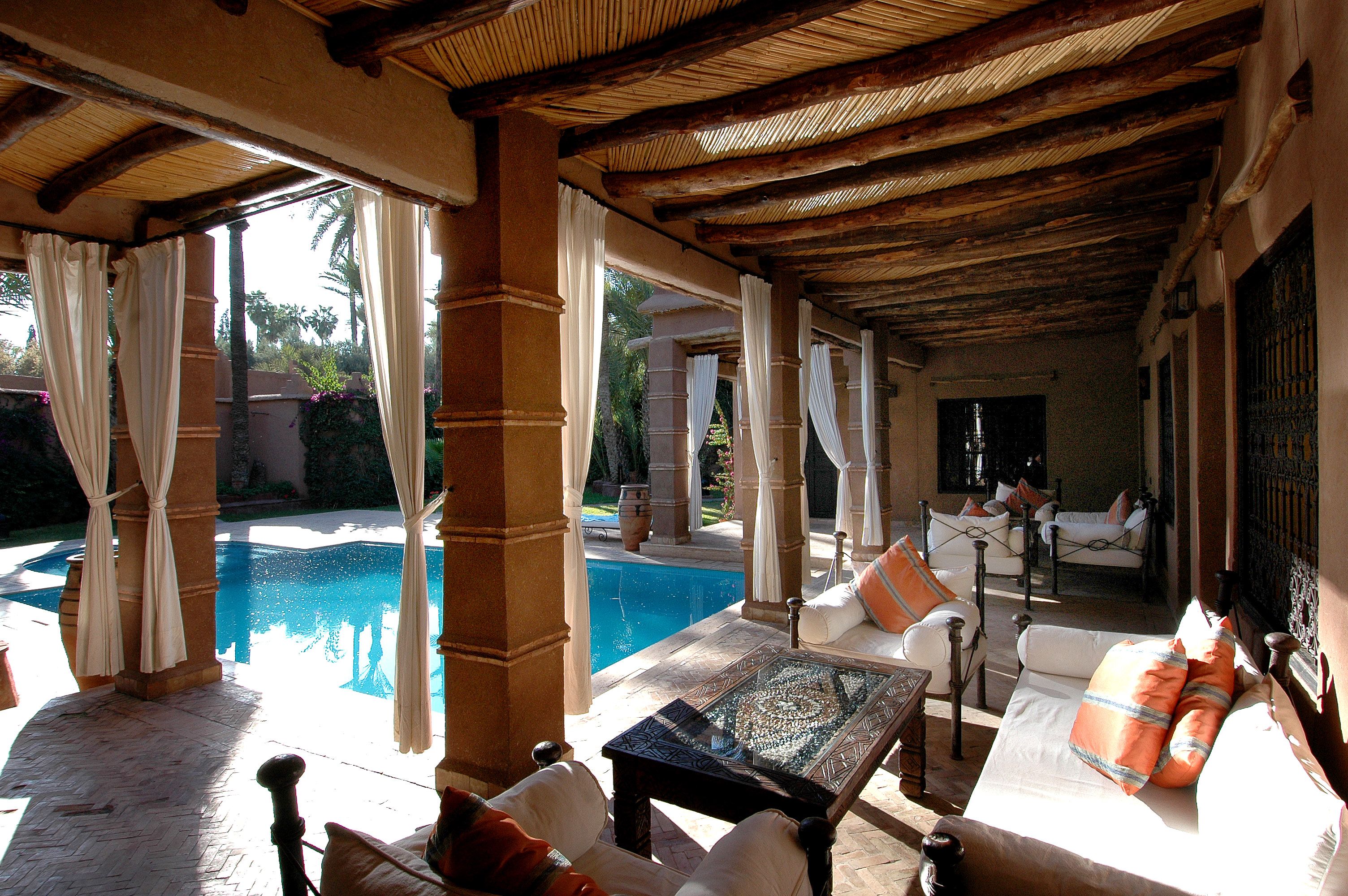
Luxury outdoor entertaining works best when one large terrace behaves like several connected rooms. The zones do not need walls. A change in flooring, a rug rated for outdoor use, a canopy, a planter or a shift in lighting can signal that one activity has ended and another has begun.
A conversation zone should be intimate enough for voices to carry. A dining zone needs more room than the table footprint suggests because chairs move backward and people stand to serve themselves. A poolside zone should tolerate wet feet and quick stops rather than pretending to be a formal sitting room.
Keep the main circulation path legible. The City of Denver’s private-property outdoor places guidelines make a similar point for patios: boundaries should define a space without destroying visibility, and lighting should support entries, steps and pedestrian routes. The principle applies to a private home too. Guests should understand where they can go without having to ask.
Comfort is what keeps people outside
Visual luxury attracts attention; physical comfort determines whether people stay. Deep seating is not automatically comfortable if the seat is too low for older guests, the cushions hold moisture or the back angle makes conversation tiring. Test furniture as a group, not as isolated pieces. The distance between two chairs can be more important than the style of either chair.
Think in layers:
- Support: varied seat heights and back support make the lounge usable for more guests.
- Climate: shade, radiant warmth, wind protection and ventilation should work together rather than compete.
- Texture: cushions, woven surfaces and timber-like finishes soften hard paving and reduce the visual feeling of an exposed yard.
- Convenience: side tables, discreet storage and nearby power prevent guests from balancing glasses on ledges.
Acoustics deserve more attention than they usually receive. A pool pump, outdoor speaker aimed at a boundary wall or hard stone surfaces can make a supposedly relaxing space surprisingly loud. Soft planting, absorbent textiles and careful speaker placement often improve a gathering more than adding another decorative feature.

Lighting should change with the evening
One bright floodlight makes an outdoor lounge feel like a worksite. A more convincing scheme uses several low-intensity layers that can be adjusted as the event moves from arrival to dinner to late conversation.
| Layer | Best location | Experience it creates |
|---|---|---|
| Guidance | Steps, edges and paths | Guests can move confidently without staring at bright fixtures. |
| Task | Outdoor kitchen, bar and serving surface | Food preparation and pouring remain practical after dark. |
| Ambient | Dining and conversation zones | Faces remain readable while the mood stays relaxed. |
| Accent | Trees, walls, planting and water | The landscape gains depth without every feature competing for attention. |
The University of Florida’s guidance on outdoor living spaces notes that path lighting provides visual guidance, while uplighting plants adds drama; it also identifies LED and solar options as energy-efficient choices. That is a useful distinction: decorative lighting should create atmosphere, while route lighting should quietly prevent trips.
Controls make the scheme feel intentional. Put arrival lighting, dining lighting and accent lighting on separate circuits or dimmers. The U.S. Department of Energy’s exterior-lighting guidance also describes automatic controls as a way to reduce energy use when areas are unoccupied. In a private lounge, the same idea has a social benefit: the space can become calmer rather than simply remaining fully illuminated all night.
Make food and movement feel effortless
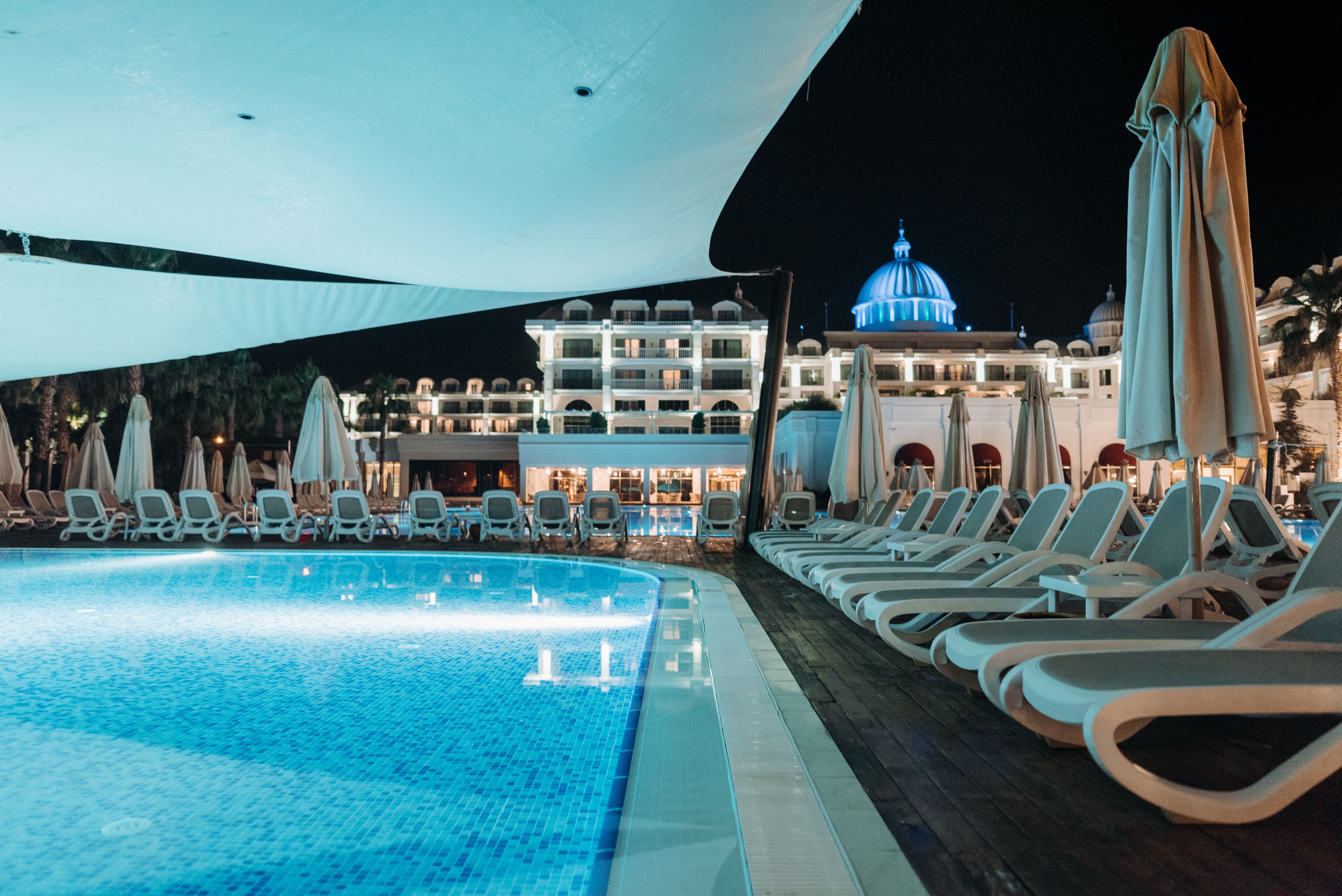
Food changes the geometry of a party. If every guest must cross the conversation area to reach a serving table, the room will feel busy no matter how elegant it looks. Place drinks where people can refill without forming a queue, and keep hot food on a stable, well-lit surface away from the main walking route.
For larger gatherings, use more than one point of access. A drinks station near the social centre and a separate food station near the dining area reduce crossing paths. Portable surfaces can be useful, but they should have a defined home when not in use; stray trolleys and coolers quickly turn a composed lounge into storage.
Sound follows the same logic. Music should support conversation rather than announce the speaker system. Keep volume lower during arrival and dining, then allow the soundscape to change later if the gathering becomes more energetic. The most luxurious party is not the one with the most equipment. It is the one where equipment never becomes the subject.
The atmosphere must still be safe
Fire features, grills and heaters can extend the season and give people a natural focal point. They also introduce real operational responsibilities. The National Fire Protection Association reports that, based on 2020–2024 annual averages, grills were associated with an average of 21,682 emergency-room injuries per year in the United States. That is a reason to plan the cooking and fire zones before buying the feature, not a reason to avoid outdoor entertaining.
Keep grills away from the home, deck railings, eaves and overhanging branches, follow the manufacturer’s clearances, and never leave an active grill unattended. For an open fire, check local rules and weather conditions, keep water or another appropriate extinguishing method close by, and make sure the fire is fully out before the gathering ends.
Safety also includes the quieter details:
- Use stable, weather-rated furniture on level surfaces.
- Secure umbrellas and canopies against wind, or remove them when conditions change.
- Keep cables out of walking routes and direct lighting away from neighbouring properties.
- Separate wet pool traffic from delicate upholstery and electrical equipment.
- Provide a clear route indoors for guests who are carrying plates, children or luggage.
The final design test
Walk through the lounge at the time a real event would happen, preferably with the lights on and the furniture in its actual positions. Carry a tray from the kitchen. Sit in the least obvious chair. Ask where a guest would put a wet towel, where a child would run, and what happens if rain arrives unexpectedly.
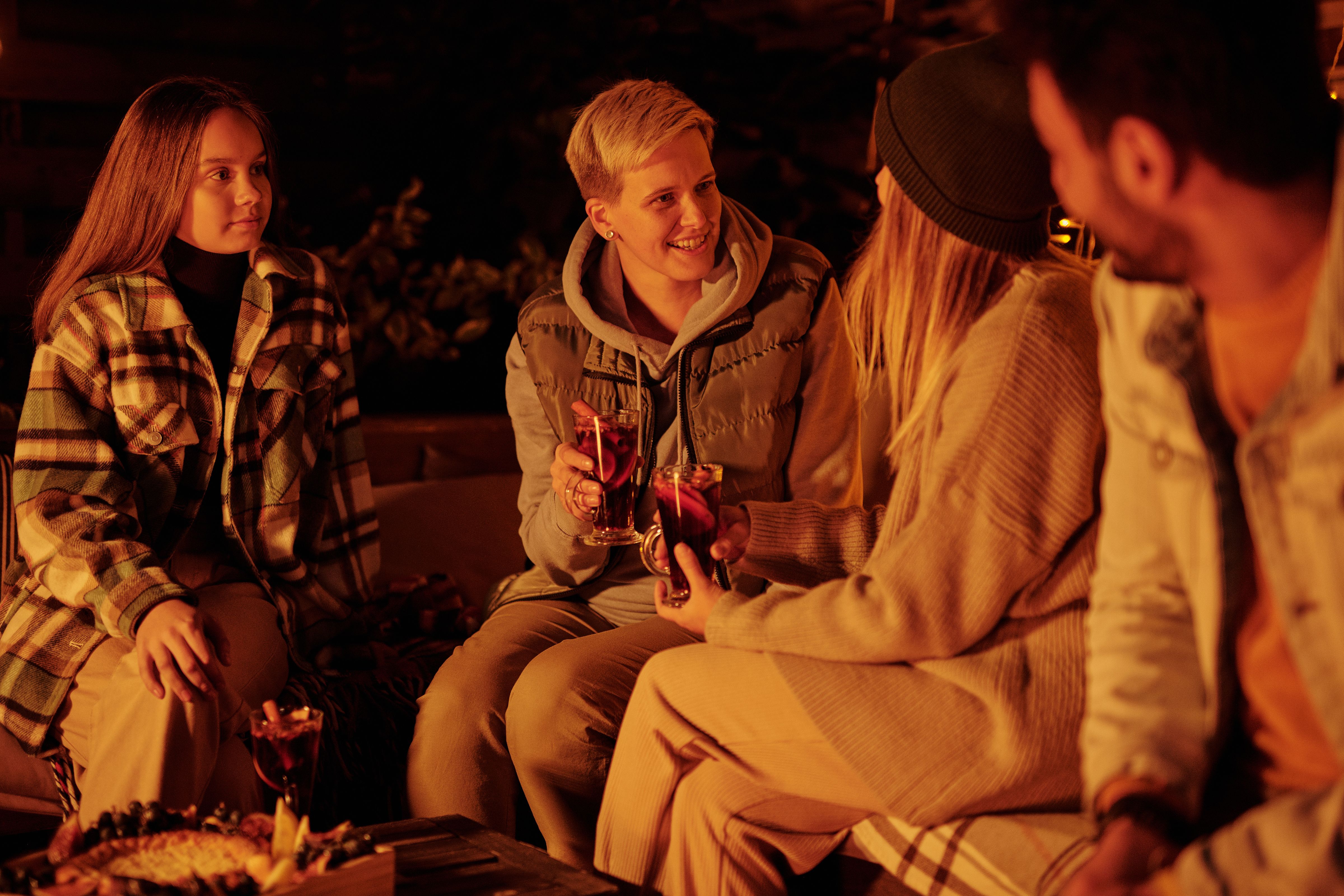
My strongest design rule is simple: remove the small decisions guests should never have to make. They should not wonder where to sit, where to place a glass, how to reach the bathroom or whether a dark step is safe. When those answers are built into the layout, people relax faster and stay longer.
That is the real role of a luxury outdoor lounge. It is not a stage set for photographs. It is a carefully edited environment that gives conversation room to develop, makes hospitality easier to deliver and lets the evening change character without requiring a reset. The details disappear, and the memory remains.
Frequently Asked Questions